PETER SHAPIRO
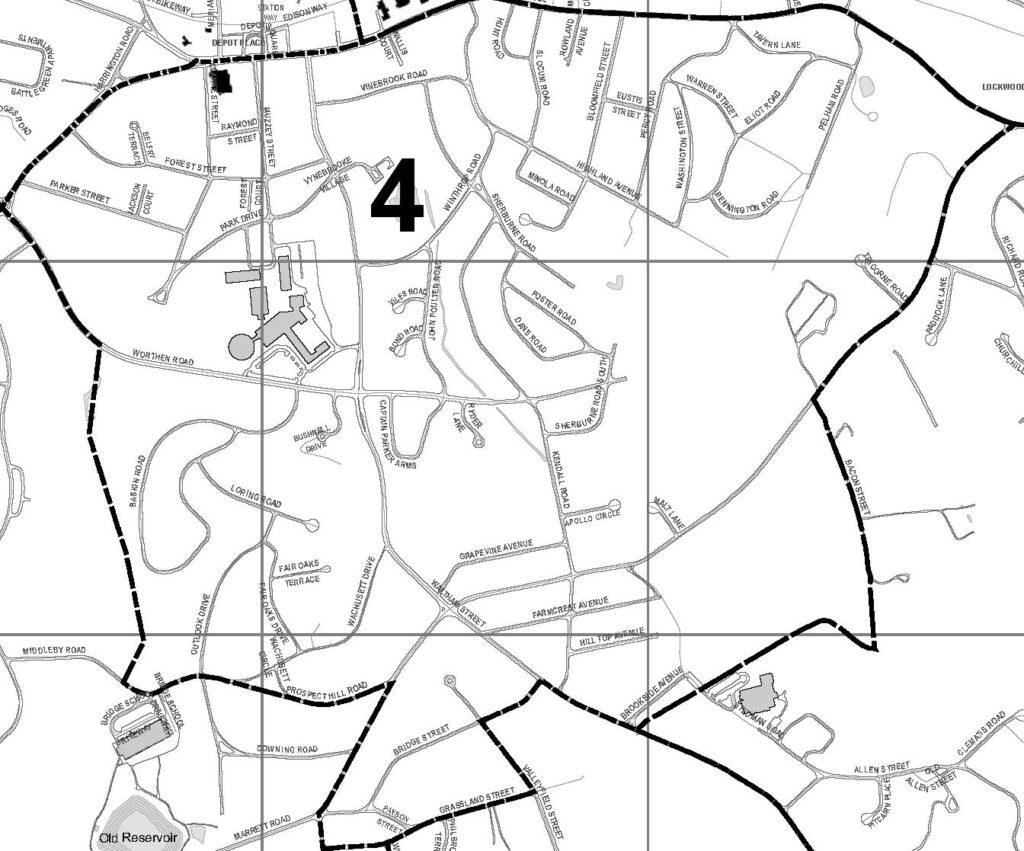
Member of Lexington Town Meeting, Precinct 4

On 3 November 2025, Special Town Meeting voted to appropriate funds for a new LHS, subject to a town-wide vote on a debt exclusion for this project. On 8 December 2025, Lexington residents voted to approve the debt exclusion, enabling the LHS rebuild to proceed. For questions or comments, don’t hesitate to contact me at PDShapiro (AT) Yahoo (DOT) com.
Background bio…
- Lexington resident since 1975: Wachusett Drive (48 years), Waltham Street (~2 years), both Precinct 4
- PhD Stanford University
- Former management consultant at Arthur D. Little, Inc. and in private practice
- Two children went through Lexington schools (Bridge, Clarke, LHS)
- Two grandchildren entering Lexington school system
- New pickleballer, author (five published novels), and amateur flute player
- Elected to Town Meeting in March 2025
LHS Rebuild
I advocated for the LHS rebuild and the debt exclusion required to pay for it.
I also advocated for the fastest and least disruptive rebuild option C.5b “Bloom” (new building in sports fields).
At Special Town Meeting in November, 91% of TM members voted for the project and specifically for allowing town residents to have their say in the subsequent debt exclusion vote.
According to unofficial results published in the Lexington Observer, on December 8th, 37% of eligible voters submitted votes on the debt exclusion. Our Precinct 4 had the highest turn-out among the nine precincts (40%). Overall, ~61.7% voted in favor (5283 in favor out of 8560 voters). Precinct 4: ~62.8% (648 in favor out of 1032 voters).
Following is a copy of my Letter to the Editor that appeared in the Lexington Observer on 17 November 2025.
We Need This Project. Let’s Get It Done
On November 3rd, Special Town Meeting voted decisively (91% in favor) to fund construction of a new Lexington High School.
Our new school, as planned in what’s called the Bloom option, will be built on fields next to the current LHS, with move-in date planned for fall 2029, after which the old LHS buildings will be demolished and their footprint re-purposed for replacement fields.
On December 8th Lexington residents will vote on a debt exclusion measure that’s required to pay for this essential project.
Here’s why I’m voting YES…
If we don’t proceed with this project, we’ll face spending $300 million for long-deferred maintenance on existing LHS buildings, basically just to keep the lights on. Even after we invest that huge amount on HVAC, roof, windows, doors, plumbing, electrical, and so on, LHS will still be way too small for its enrollment, with overcrowded classrooms, bottlenecked hallways, an overflowing cafeteria, undersized gym, and other spaces ill-suited for today’s educational needs. And we’d still have the security vulnerabilities of LHS’s open campus.
Some have advocated that we renovate and add to LHS in multiple stages. But after careful consideration that approach was rejected because it would cost more, and take longer, and it would be incredibly disruptive and unsafe for our kids and others on LHS premises during onsite demolitions and construction.
In any case, a phased LHS rebuild is not what’s on the table now. What is on the table now is Bloom, which will give us an entirely new school at lower cost, faster, and with much less disruption.
Bloom’s cost is similar to that of other high school projects in our area when comparisons are normalized for date, size, and scope. A tax impact calculator shows that the tax increase to cover its cost will be minimal at first, rise gradually over 10 years, and at its peak in FY2036 will account for less than 8% of our property taxes.
Doing nothing is not an option. Postponing the project would only increase its cost to Lexington taxpayers. Bloom will provide us with a wonderful new high school that will serve us well for many decades. It will be a tremendous asset for our town and for our kids. It’s the right choice. Let’s get this done by voting YES on Monday December 8th.
Peter Shapiro
Precinct 4 Town Meeting Member
After Annual Town Meeting in April 2025, the following update was sent to Precinct 4 friends and neighbors on my email list. (LMK if you’d like your email address added to the list)
Annual Town Meeting 2025 concluded Monday night, 14 April 2025, after six ATM sessions and one earlier Special Town Meeting (STM) session. We voted on numerous Articles, generally without much controversy but in some cases after vigorous debate.
Overall I thought TM did an excellent job assessing the issues and making considered decisions. I was particularly impressed by the skill, good humor, and authority demonstrated by our Moderator Deborah Brown throughout our lengthy sessions.
That said, I was struck by several Articles’ surprisingly high cost relative to their prospective benefits and on these, I voted No (they passed anyway).
Articles of note:
— Articles 2 (Special Town Meeting), & 34 – Pause new multifamily developments in MBTA zoning districts, and other related zoning adjustments… I voted Yes, and all passed.
— Article 10a – Design trail from Cotton Farm to Community Center – I voted No due to high initial design cost and high potential but still unknown future cost – Passed
— Article 10h – New athletic fields at Harrington — I voted Yes after we were informed at the last minute that we would use natural grass for field surfaces – Passed
— Article 12k – Design new parking lot at Lincoln Park – I voted No due to very high design cost ($375K) and extremely high expected construction cost (~$4M) – Passed
— Article 26 – Local voting rights for lawful permanent residents – Voted Yes — Passed
— Article 27 – Allow 16 year olds local voted rights – Voted No — Failed.
— Article 23 – Issue RFP & select responsive developer for affordable housing (AH) project on town land at 116 Vine – I voted No based on my assessment that this project would be financially nonviable without substantial financial contributions from the town beyond donating town land, a cost that would not be justified by the project’s small AH benefit (expected ~6 units). There are other better opportunities for town investments to expand affordable housing, an important goal that I support. (Click here for more about 116 Vine) – Passed
Here’s the link to see how TM members voted on all Articles over our 6 sessions… Scroll down to Electronic Votes Per Session and click on the session of interest: https://lexingtonma.gov/2294/2025-Annual-Town-Meeting-Legal-Postings-
MBTA Zoning By-Law
On 17 March 2025, Special Town Meeting passed Article 2 to slow down multifamily developments under MBTA zoning. Approximately 95% of Town Meeting members (including myself) voted for Article 2. The STM (including myself) also turned town an amendment to Art 2 that would have retained current By Right zoning rules for the Center.
Background
- In 2023, the Planning Board recommended amending our zoning bylaw to establish twelve districts for multi-family housing developments, both to comply with the state’s MBTA Communities Act as well as to provide more housing options in the town, including more affordable housing. The 2023 Annual Town Meeting adopted the PB’s recommendation.
- According to the Planning Board, as of early 2025 multi-family developments in the pipeline in MBTA zoning districts would add 1095 dwellings.
- Almost all of the multi-family dwellings in that pipeline will comprise smaller units, a category that’s rare in Lexington: 60% one bedroom (450-800 sf), 28% two bedroom (700-950 sf), 11% three bedroom (1000-1350 sf), and only 1% four bedroom (3000 sf). Most will be rentals (87%) versus owned (13%). [Source: Planning Board, 26 Feb 2025]
- The future residents of these buildings undoubtedly will benefit Lexington with their talents, economic activity, and tax dollars.
- But too much of a good thing too fast may create problems for the town.
- According an analysis published by our Appropriations Committee (14 Feb 2025), rapid growth in new housing enabled by our current MBTA zoning bylaw will increase school and other expenses well beyond income from new tax revenues, producing a “significant structural budget gap.”
- The twelve MBTA zoning districts provided capacity to add more than 12,500 dwelling units, roughly equal to the town’s current number of dwellings. We don’t know how much of this capacity might be targeted by developers, nor how quickly it might be built out, but it was concerning to have the town exposed to this level of potential By Right development.
- With By Right developments, abutters can make suggestions during public hearings but don’t have leverage to affect what is built if the developer stays within the rules and follows the required process for PB approval. This makes me uncomfortable given my experience as an abutter to a large special-permit development project where we were able to exercise leverage to negotiate with the developer.
- On 17 March 2025, a Special Town Meeting passed a motion under Article 2 to reduce capacity for additional developments under the MBTA zoning bylaw (while still complying with state law), to allow time to assess effects of the rapid increase in dwelling units on town services and finances. This was a compromise version of Article 2 negotiated with the Planning Board that reduced the number of MBTA zoning districts to four from twelve, and the number of units that could be built in such districts.
- These four districts will provide capacity for 1314 dwellings in addition to the 1095 already in the pipeline (for a total of ~2409 dwellings).
- In addition, 15 property owners in MBTA zoning overlay districts have submitted subdivision applications that have the effect of keeping their options open for 8 years if they choose to propose multifamily developments under MBTA zoning rules applicable prior to Article 2.
- The STM rejected an amendment to retain By Right zoning in Lexington Center, that had been eliminated by Article 2.
About the Center…
The STM’s vote against the amendment to Art 2 recognized that one-size-fits-all By Right zoning doesn’t work for the Center. At the same time, the PB should take seriously numerous comments at the STM (and that I share) that we DO want multifamily developments in the Center, but in a way that conforms to the Center’s particular attributes. A development that works for a Center side street like Muzzey or Clarke might not work on Mass Ave, and it makes a difference which side of Mass Ave it’s on. The Planning Board has experience and resources to work this out. I hope the PB takes this on as a priority in order to prepare a Center zoning recommendation for no later than our next ATM.
Meanwhile — despite Article 2 — there are two sites in the Center where developers moved quickly enough to preserve their ability to proceed under MBTA By Right zoning rules. At one of these sites, at 16 Clarke St, next to the library, the developer has proposed a 4 story building that would be allowed under zoning rules, but appears — in my opinion — to be incompatible in its scale and appearance with its surroundings in the Battle Green Historic District. At an informal hearing in December 2025, members of the Historic Districts Commission also expressed that view. We’ll see how the developer responds. As I said at that hearing, I would be in favor of a project with 3 floors, top floor set back, on the same footprint, about the same as the height of Lexington Place at 50 Waltham St. Similar comments were made by several HDC members. I hope the developer will consider this feedback if they choose to submit a revised proposal.
Where we are now…
Lexington has benefited from the professionalism of town managers and staff and from residents who give their time on committees and boards and in Town Meeting. Our town works, with excellent basic services and amenities enjoyed by residents and visitors alike, including a vibrant town center enhanced by recent additions of cafés and bakeries. As we are reminded each time we visit the center, Lexington is not only a community; it’s a destination that uniquely commemorates the founding of the nation.
At the same time, however, we face issues related to the LHS rebuild, expansion of multi-family housing in our MBTA zoning districts, our need to adjust zoning by-laws to maximize benefits from developments while limiting negative effects and allowing for abutter inputs, town investment trade-offs, and town affordability.
I welcome your inputs and questions on these or any other matters.
Questions? Comments? Email: pdshapiro (AT) yahoo (DOT) com
Or text, or phone: 781-608-6348
Please share this website with other Lexingtonians residing in Precinct 4 … https://SHAPIRO4LexTM.us